
Whiteside County Three-Day Release Window
The Whiteside County Sheriff website and county sitemap showed no official 72-hour or three-day release view as of July 16, 2026. The county also offered no public current-inmate search, feed cadence, retention policy, photo stream, or online filter for the preceding three days. A rolling list must not be invented from arrest news, a registry, or a commercial roster.
The official Sheriff page below is the source checked for a public three-day release channel.
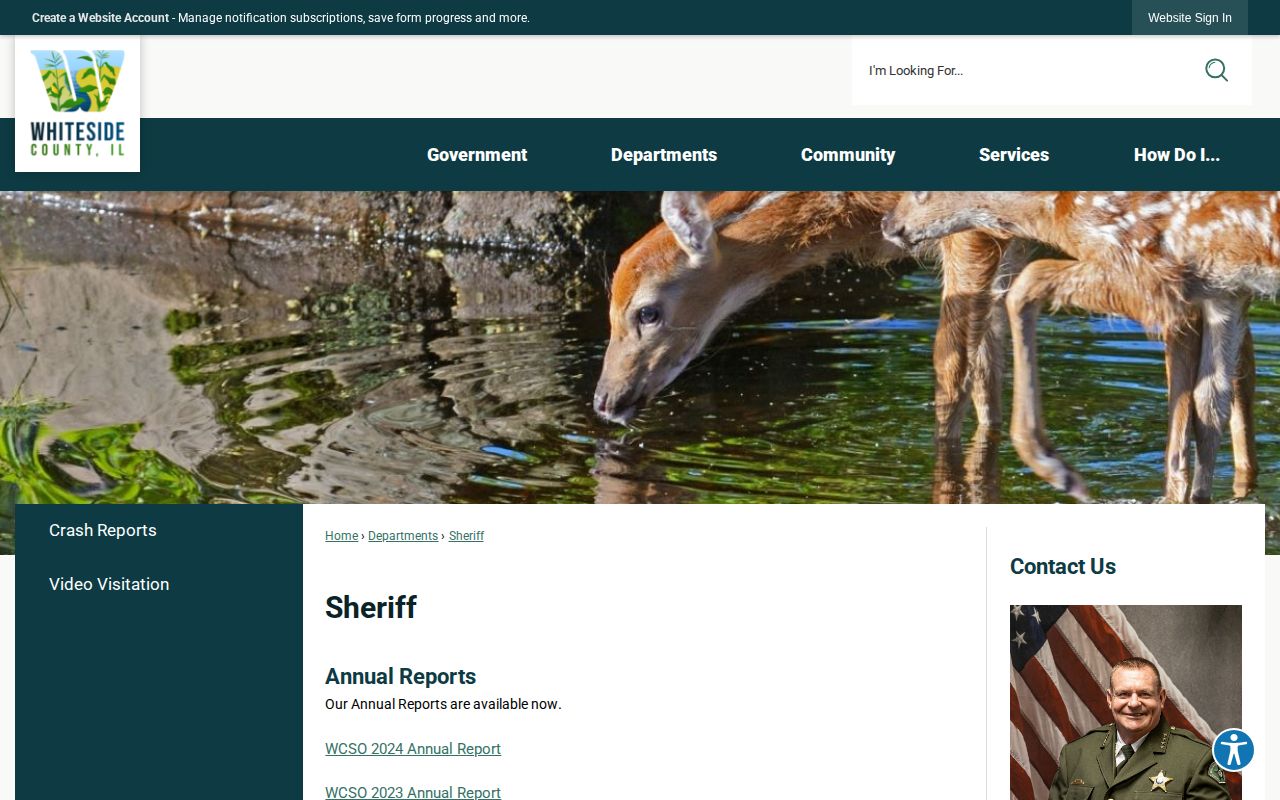
The page supplies local contacts but no rolling 72-hour list, photo feed, or inmate app.
A three-day window remains useful as a request frame. It catches events that may span a Friday evening, weekend, holiday, or delayed office response. The jail's inspected procedure records the date, time, and authority for every release, discharge, or transfer. Those fields let a requester reconstruct the window without implying that the Sheriff maintains a ready-made report.
Check 72 Hours of Whiteside Releases
Build the request around the period that matters. “Last 72 hours” moves each minute and can cause confusion when an office answers later. Fixed dates and times make the search reproducible and help Records identify the existing material.
- Set the range. Write a start date and time and an end date and time, including the year.
- Call the jail. Ask Whiteside County Jail at 815-772-5203 about a named person's recent custody exit.
- Contact Records. Call 815-772-5217 during Monday through Friday office hours and describe the record sought.
- Include all exit types. Ask about release, discharge, and transfer, plus authority and destination where kept.
- Check VINE and court records. Treat either as supporting evidence and confirm with the source custodian.
- Follow a transfer. Search IDOC after prison intake or contact the other named custodian.
For one person's full path rather than a three-day group, the Whiteside County released-inmate guide separates county, state, federal, court, and VINE sources.
Fields for a Whiteside 72-Hour Review
These items come from the documented jail exit and booking process. They are not columns from a public three-day page. Request only existing records and recognize that lawful exemptions or redactions can limit a response.
| Field | Why it matters |
|---|---|
| Person and booking record | Connects the exit to the correct jail admission. |
| Date and time | Places the event inside or outside the fixed window. |
| Release authority | Identifies the legal or custodial basis for the exit. |
| Exit type | Separates release or discharge from transfer. |
| Destination, where recorded | Points to the community or next custodian. |
| Case, judge, and court | Helps locate the order behind the action. |
| Property receipt | Documents the itemized property-return step. |
Whiteside Weekend Release Requests
A three-day view would normally bridge a weekend, but Whiteside publishes no such view. Public sources also give no special weekend schedule, promised exit time, pickup door, or fixed delay. Do not predict an hour from the court order alone. Staff may still verify identity and authority, inspect for injury, search the person, return property and maintenance medication, and complete records.
When the range crosses a holiday or weekend, preserve the full period in the request. The Sheriff's Records office publishes weekday hours and holiday closure, but that office schedule does not prove that the jail processes releases only then. Ask for the actual recorded time.
Note: A delayed response from Records does not change the underlying release time recorded by the jail.
Whiteside Three-Day FOIA Wording
The formal route is the county FOIA page. A practical description asks for “existing records showing releases, discharges, or transfers from [start] through [end], including date, time, authority, and destination where recorded.” Name the Sheriff or jail and state the desired format. The county need not create a new report if it keeps only underlying records.
A name-specific request may be more efficient and avoids pulling details about unrelated people. The posted schedule lists the first 50 black-and-white pages as free, later pages at $0.15 each, color at $0.25, digital media at actual cost, and certification at $1 per record. Review and redaction rules still apply.
Whiteside Release Versus Transfer
A community release ends detention at the jail and sends the person into the community, sometimes under pretrial, probation, parole, or mandatory supervised release conditions. A transfer ends Whiteside County custody but continues confinement elsewhere. The jail record's authority and destination are the key fields. “Not at Whiteside County Jail” cannot distinguish those outcomes.
When IDOC is the destination, search the Illinois Department of Corrections after intake. An IDOC status of PAROLE means release from prison to supervision, not final discharge. Follow another county, federal authority, or ICE through that custodian's system.
Whiteside's Stronger Local Evidence
The lack of a 72-hour page is a publishing limit, not an evidence gap. The 2024 state jail inspection documents the jail's release-date, release-time, and authority fields, and the Sheriff's annual report confirms that Records maintains booking records. These sources provide a better verification route than a commercial list that may omit transfers or fail to explain the exit type.
The court record can supply context such as a pretrial order, dismissal, sentence, or custody credit. Still, it does not show when jail staff completed the exit. Pair the case chronology with the jail record when reconstructing a weekend or holiday span. Illinois VINE can add an alert, but it is not a permanent archive and can lag its source.
Systems Supporting a Whiteside Review
Illinois VINE and the court file support a three-day reconstruction in different ways. VINE can transmit a custody or case-status change from a participating source. Its alerts can cover release, transfer, escape, facility changes, and court events. A transmitted alert should be saved with its time, but the source agency still controls the underlying event record. Released entries may not remain searchable, and a missing entry proves nothing.
Judici can help locate the Whiteside criminal case and show docket activity, bond or pretrial entries, a disposition, sentence, mittimus, or custody credit. It is not the Circuit Clerk and does not certify records. More importantly, a judicial order can precede the physical exit. Use the case to understand legal authority and the jail's date-and-time field to identify when staff completed release or transfer.
The Morrison and Sterling court locations can matter during a multi-day review. In Judici, courtroom numbers refer to the Eastern Sterling Courthouse while letters refer to the Main Morrison Courthouse. That convention helps direct a request to the branch associated with the entry. Certified case material comes from the Clerk, not from a screen capture.
Keep Whiteside Date Ranges Precise
A broad request for everyone “released recently” can blur the event and pull in people unrelated to the actual question. When one person is known, use the name, booking date, and fixed three-day span. When a group record is truly needed, define the same time zone and endpoints and ask for fields the inspection confirms. Avoid asking the county to calculate a rolling window after the fact.
Also avoid treating all exits as one category. A discharge after sentence completion, a court-authorized release, and a transport to IDOC have different meanings. The authority field and destination, if maintained, preserve that distinction. If the record names another custodian, continue the review there rather than labeling the event a community release.
Reconcile Three Days of Whiteside Records
A multi-day review can contain several events for one person. A court appearance may be followed by return to the jail, then release or transfer on a later date. A VINE alert may be transmitted after the source event. An IDOC entry may not appear until state intake is complete. Put each event in time order and retain the agency attached to it rather than selecting the first date that looks like a release.
The jail's case-disposition, judge, and court fields can help connect an exit to the correct Whiteside proceeding. Judici can then locate the chronology, while the Circuit Clerk supplies a certified order if needed. The court supplies legal context; the jail supplies the recorded physical exit.
For a transfer, search the destination only after allowing for intake and data entry. IDOC's search uses name, birth date, or IDOC number, and its detail can show status, location, admission, release, parole, and discharge information. A projected date is not the actual county exit. PAROLE reflects prison release to supervision, not final discharge.
Read a Whiteside FOIA Response
A response may provide underlying records rather than the requested three-day compilation. Review each record against the stated range and note whether the event is labeled release, discharge, or transfer. If a field is withheld or redacted, use the agency's explanation rather than guessing. If no compiled report exists, that does not disprove an individual release record.
When the request concerns one person, ask Records to connect the exit to the matching booking. This reduces the risk that two admissions or similar names are combined. If the period crosses midnight, specify the full date and time at both ends. That precision makes comparison with VINE and court entries more meaningful.